William Gregory
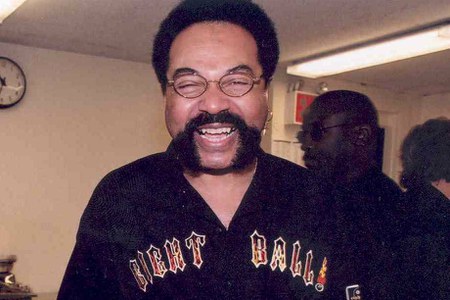
In July 2000, William Gregory was exonerated of two sexual assaults in Louisville, Kentucky. DNA testing excluded him as the perpetrator of the 1992 crimes.
The Crime
On June 1, 1992, 20-year-old K.V. was awakened at 6 a.m. in her home at the Breckinridge Square Apartments in Louisville, Kentucky, by a nude man wearing pantyhose over his head. He said he had been watching her and just wanted sex.
When the man attempted to touch K.V., she fought back. They struggled and K.V. kicked over a glass table. K.V. ripped the pantyhose off the man’s head and scratched his face before he fled out the back door.
Afterward, K.V. discovered that a television, a compact disc player, and her telephone had been stolen.
Six weeks later on July 19, 71-year-old M.S. was awakened in her Breckinridge Square apartment by a naked man holding a knife. The man climbed on top of M.S., but then rolled off and fled out the back door. M.S.’ hand bled from a cut, and she later discovered that a video cassette recorder and a telephone answering machine were missing.
The Investigation
Immediately after being attacked, K.V. ran to a neighbor’s apartment and called the police. She described her attacker as a 5-foot-6 Black man, between 30 and 40 years old, with a muscular build and greasy hair. She said the attacker was articulate and did not use slang.
When the neighbors heard K.V.’s description, they said it sounded like 44-year-old William Gregory, who lived in an apartment upstairs in the same building. Police showed K.V. a photo array that included Mr. Gregory’s photograph, but she did not make an identification. Later that day, however, K.V. saw Mr. Gregory in the building and believed he was her attacker.
Officers inspected Mr. Gregory’s apartment and examined him for scratches, but found nothing. Even so, that night, police arrested Mr. Gregory at the department store where he worked as a salesman. He was released on bond on June 15 and moved in with a friend, Donna Levitch.
After the attack on M.S., police were called and took her to the hospital. She described her attacker as a Black man in his late 20s or early 30s, with a small build. She said he was clean-shaven, had short hair, and a greasy substance on his shoulders and neck.
Five days later on July 24, the police asked Mr. Gregory to participate in a live lineup. Once he arrived at the police station, officers told him that he could consent to a one-on-one showup rather than wait for the fillers to be located for a conventional lineup. Mr. Gregory signed a waiver and when M.S. viewed him, she identified him as her attacker.
Mr. Gregory was then arrested a second time. He was charged with one count of rape, one count of attempted rape, one count of assault, and two counts of burglary.
The Trial
In August 1993, Mr. Gregory went to trial in Jefferson County Circuit Court. K.V. and M.S. testified and identified him as their attacker.
State forensic analyst Dawn Katz testified that Mr. Gregory’s hair shared all 16 examined characteristics with the six hairs found in the pantyhose recovered from K.V.’s apartment. These included the unusual lack of an inner layer called a “medulla” — contrary to what she usually saw in a Black person’s hair — as well as the presence of extremely rare pigment clumps called “ovoid bodies” that she had only seen before in cattle hair.
Two police officers, Joe Carroll and Steve Clark, testified that they had listened in on Mr. Gregory’s phone call after he was arrested the second time. During it, Mr. Gregory recited the items that had been taken from K.V.’s apartment, suggesting that he had taken them.
Mr. Gregory testified and denied that he committed the crimes. He had been home at the time of K.V.’s attack, and in Ms. Levitch’s apartment at the time of M.S.’s attack. Ms. Levitch also testified and confirmed that her friend was in her apartment when M.S. was attacked. Mr. Gregory also clarified that the police officers had told him which items were taken from K.V.’s apartment.
The defense presented evidence that at 6:30 a.m. on August 14, 1992, while Mr. Gregory was in jail, a rape and burglary occurred in the Woodbridge Apartments, about four miles from the Breckinridge Square Apartments. A man, armed with a knife, entered through a sliding screen door, and stole a VCR and a telephone. He was described as a Black man, aged 30 to 35, approximately 5-foot-7 or 5-foot-8, with a mustache. A wanted poster of the man had also been placed in the police file of M.S’ attack.
The defense also noted that Mr. Gregory did not fit the descriptions given by the two victims. He was 44 years old, 5 feet 11 inches tall, and had a full beard and a potbelly at the time of the crimes.
On August 16, the jury convicted Mr. Gregory of rape, attempted rape, and two counts of burglary. He was acquitted of the assault charge. In October 1993, he was sentenced to 70 years in prison.
The Exoneration
Mr. Gregory contacted the Innocence Project after his appeal was unsuccessful. In March 1998, the Innocence Project was able to arrange for DNA testing of the hair evidence. The hairs were tested using mitochondrial DNA testing, a relatively new form of DNA testing. Initially, one hair was tested and excluded Mr. Gregory as the source.
The prosecution, insisting that the rest of the hairs be tested, ordered further testing at their own expense. The results once again excluded Mr. Gregory.
During the reinvestigation, the defense learned that prior to M.S.’ identification of Mr. Gregory in the one-on-one showup, she had failed to identify him in a photograph array. That information had not been disclosed to the defense prior to Mr. Gregory’s trial.
On July 5, 2000, Mr. Gregory’s convictions were vacated, the charges were dismissed, and he was released from prison. He was the first person to be exonerated by mitochondrial testing alone and the first person in Kentucky to be exonerated based on DNA testing. He had served seven years in prison.
Mr. Gregory later filed a wrongful conviction lawsuit accusing detectives of withholding evidence of two other rapes in the area around the same time. The lawsuit against the city of Louisville and the state of Kentucky was later settled for a total of $4.6 million, with the city paying $3.9 million and the state $700,000.
Time Served:
7 years
State: Kentucky
Charge: Rape, Attempted Rape, Assault, Burglary (2 cts.)
Conviction: Rape, Attempted Rape, Burglary (2 cts.)
Sentence: 70 years
Incident Date: 06/01/1992
Conviction Date: 08/16/1993
Exoneration Date: 07/05/2000
Accused Pleaded Guilty: No
Contributing Causes of Conviction: Eyewitness Misidentification, Unvalidated or Improper Forensic Science
Death Penalty Case: No
Race of Exoneree: African American
Race of Victim: Caucasian
Status: Exonerated by DNA
Alternative Perpetrator Identified: No
Type of Crime: Other, Sex Crimes
Forensic Science at Issue: Hair Analysis
Year of Exoneration: 2000