Wilton Dedge
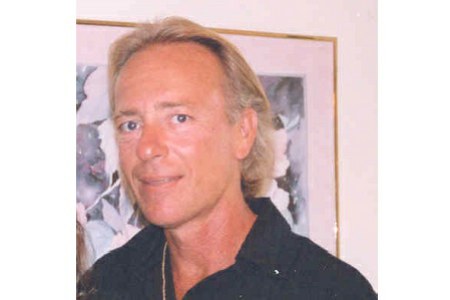
In 2004, eight years after he requested post-conviction DNA testing, Wilton Dedge was exonerated and released from prison in Florida. In 1982, he had been sentenced to life in prison after he was convicted in Brevard County for one count each of sexual battery, aggravated battery, and burglary.
The Crime
On the afternoon of Dec. 8, 1981, a 17-year-old girl was changing clothes in her home in Canaveral Groves, Florida, when she was confronted and sexually assaulted by a man holding a utility knife.
After the attacker left, the victim contacted her boyfriend. Police were called and she was taken to a hospital emergency room, where a rape kit was taken and her clothes were collected.
The Investigation
She described her attacker as about 6 feet tall, 160 pounds, with a receding hairline.
Four days later, the victim saw a man at a convenience store and told her sister that he resembled her attacker, only shorter. Her sister said the man was “Walter Hedge.”
In January 1982, after the victim contacted police, they arrested Walter Dedge. When shown his picture, the victim’s sister clarified that the man they had seen was actually Walter’s 20-year-old brother, Wilton Dedge.
Wilton Dedge’s picture was placed in a lineup and the victim identified him as her attacker — even though he was 5 feet 5 inches tall, weighed 125 pounds, and had a full head of hair.
On Jan. 8, Wilton Dedge was arrested. He was charged with one count each of sexual battery, aggravated battery, and burglary.
The Trial
In April 1982, Wilton Dedge went to trial in Brevard County Circuit Court. The victim identified him as her attacker.
John Preston, a retired Pennsylvania state trooper, testified that his dog, Harass II, had linked Wilton Dedge to the victim’s home through a “scent lineup.” According to Mr. Preston, three months after the attack, the dog sniffed a bag containing paper towels that Wilton had used after he washed his hands. The dog was led to four piles of soiled bedsheets, including ones that came from the bed where the victim was attacked.
Two pubic hairs had been found on the victim’s bed. A hair analyst for the prosecution testified that one was consistent with the victim’s hair, while the other was from a male and that Wilton Dedge could not be excluded as its source. He further testified that although he could not determine how common such hair characteristics were, “it would not be a million white people” who possessed hairs similar to the one from the crime scene.
Sperm was found on a swab in the rape kit, but no blood typing was performed.
The defense sought to present an expert witness to challenge the reliability of the dog scent evidence, but the trial judge did not allow the witness to testify.
Wilton Dedge took the stand and denied any involvement in the crime. He testified that he had been out of work at the time of the attack and was 50 miles away, in New Smyrna Beach, repairing the transmission of a friend’s vehicle. Two witnesses corroborated his account. The defense also presented a $25 check Wilton had received for the work, which he had cashed at an auto parts store across the street from where he had performed the repairs.
Moreover, Wilton explained that on the night of the attack, he had been at a biker bar in New Smyrna Beach where a fight broke out. Police reports confirmed that a fight had occurred at the bar at 9:45 p.m.
On May 4, 1982, Wilton Dedge was convicted of sexual battery, aggravated battery, and burglary. He was sentenced to 30 years in prison.
In December 1983, the Fifth District Florida Court of Appeal reversed the convictions and ordered a new trial. Appellate Judge Winnifred Sharp, the author of the ruling, declared, “Although the scent lineup was persuasive, there were two major errors committed at trial that related to it.” The first error, she said, was the judge’s ruling that blocked the defense from presenting an expert on scent discrimination. She noted that the scent lineup wasn’t conducted until three months after the crime, which the defense witness had intended to address.
The second error was the improper admission of hearsay testimony from Mr. Preston claiming that an expert in scent discrimination had validated the dog’s qualifications. This testimony, Judge Sharp concluded, improperly allowed an absent witness to vouch for the dog’s reliability.
In August 1984, Wilton Dedge went to trial a second time. The prosecution evidence was similar to the first trial, with the addition of new testimony from a jailhouse informant, Clarence Zacke.
Mr. Zacke testified that Wilton Dedge had confessed to the crime, called the victim an “old hog,” and said that if he got out of prison, he would kill her.
The defense presented Glen Johnson, a dog handler from the Royal Canadian Mounted Police (RMCP). Mr. Johnson testified that the RCMP didn’t use tracking dogs in criminal prosecutions because the dogs are too unreliable.
On Aug. 31, Wilton Dedge was again convicted on all charges. He was sentenced to life in prison plus 30 years with a provision that he could not request parole until after 25 years.
The conviction was upheld by the Fifth District Florida Court of Appeal in 1985, but remanded with an order to remove the 25 year parole restriction, making him eligible for parole immediately.
The conviction was upheld by the Fifth District Florida Court of Appeal, but was remanded for resentencing. On remand, Mr. Dedge was sentenced to life in prison plus 30 years.
The Exoneration
In 1996, Wilton Dedge became one of the first Florida inmates to seek post-conviction DNA testing, five years before the state would pass a law to allow access to such evidence. His motion was granted in 2000, and, in June 2001, mitochondrial DNA testing excluded Wilton Dedge as the source of the pubic hair.
The Innocence Project asked the court to overturn Wilton’s conviction on grounds of actual innocence. The prosecution opposed the motion on legal grounds, arguing that Wilton was not entitled to DNA testing because the law had not yet been passed when he filed his motion.
This legal battle stretched out for several years. At one point, the prosecution stated that it would oppose Wilton Dedge’s release even if they knew that he was absolutely innocent. Ultimately, the prosecution argument was rejected by Brevard Circuit Judge J. Preston Silvernail and again by the Fifth District Court of Appeal in April 2004.
At that point, further testing was ordered on the biological evidence found on the anal swab recovered from the rape kit. Wilton Dedge was excluded as the source of the biological evidence. On Aug. 11, 2004, his conviction was vacated, the prosecution dismissed his case, and Mr. Dedge was released.
In 2005, the Florida Legislature awarded Mr. Dedge $2 million in compensation.
Time Served:
22 years
State: Florida
Charge: Sexual Battery, Aggravated Battery, Burglary
Conviction: Sexual Battery, Aggravated Battery, Burglary
Sentence: Life plus 30 years
Incident Date: 12/08/1981
Conviction Date: 05/04/1982
Exoneration Date: 08/11/2004
Accused Pleaded Guilty: No
Contributing Causes of Conviction: Eyewitness Misidentification, Informants, Unvalidated or Improper Forensic Science
Death Penalty Case: No
Race of Exoneree: Caucasian
Race of Victim: Caucasian
Status: Exonerated by DNA
Alternative Perpetrator Identified: No
Type of Crime: Sex Crimes
Forensic Science at Issue: Hair Analysis, Other
Year of Exoneration: 2004